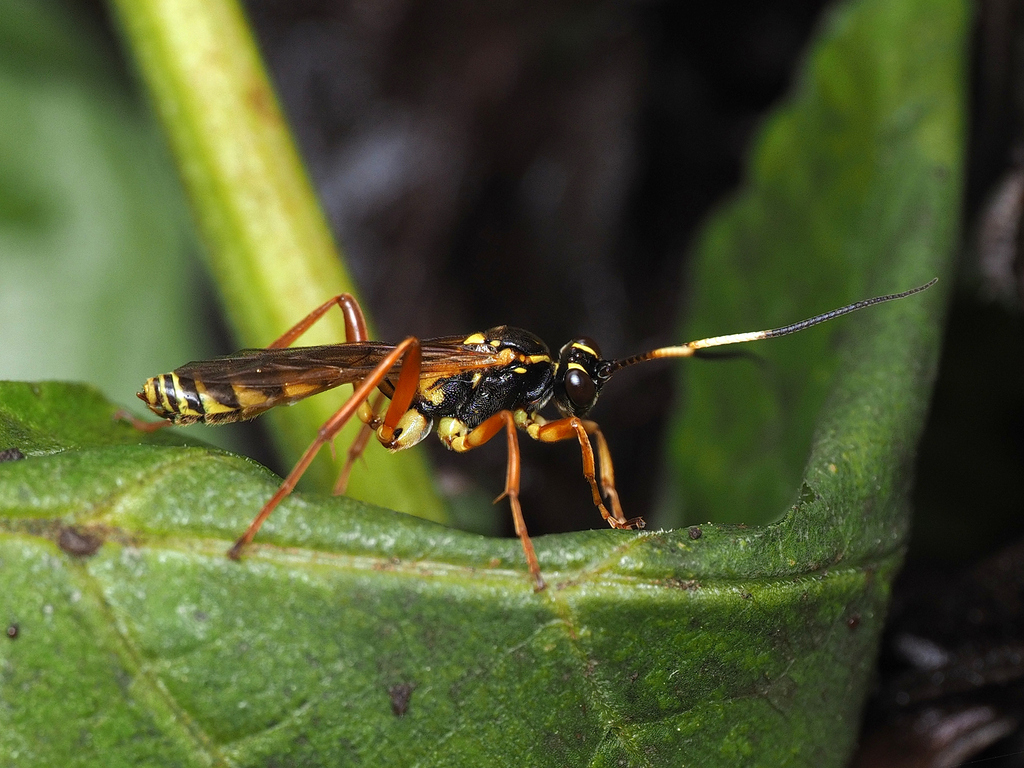
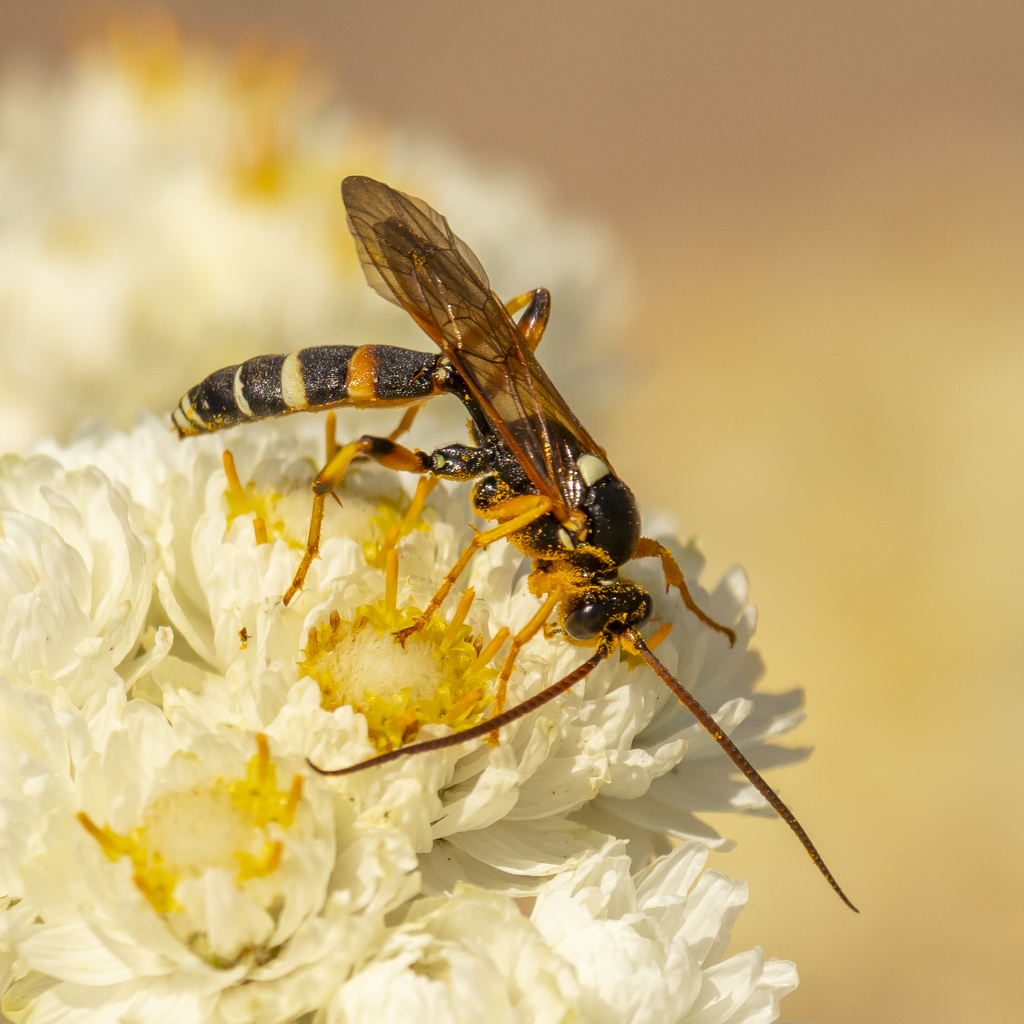
Ichneumoninae is the largest ichneumonid subfamily
with ~4,300 species in 437 genera.
In North America alone, there are around 715 described species,
with likely several hundred more awaiting formal description.
Ichneumonines are among the most striking ichneumonids due to the
striking coloration of many species.
The most commonly encountered species are in the sexually dimorphic
genera like Ichneumon and Diphyus.
Males of these genera are often apparent mimics of stinging wasps
(Aculeata) and can be found
flying above vegetation frenetically searching for
mates. Females tend toward more drab colors like brownish-red and
black and are spend more time searching around vegetation for hosts.
Photo by Doug WechslerPhoto by Denis Doucet
All ichneumonines are endoparasitoids of lepidopterans
and oviposit into the host larva or pupae and almost
always emerge from the
host pupa. The only exception is
Colpognathus which emerges from the mummified remains
of the host final instar larva.
Unlike the many ichneumonid groups
that oviposit into their concealed hosts with the aid of
a long ovipostior, ichneumonine females gain direct access to their
hosts prior to oviposition. This often requires digging
through soil and leaflitter or crawling under bark
crevices and through plant stems.
Species in which the females have a rounded
or blunted metasomal apex (=amblypygous) always attack
larvae and are true koinobionts that oviposit into
earlier instar larvae. Those with a sharper metasimal apex
with an exposed ovipositor (=oxypygous) may either attack
larvae or pupae but probably most commonly oviposit into
prepupal larvae or fresh pupae. Ichneumonines are
somewhat unusual in that many genera overwinter as
adult females in a variety of hibernacula like
tufts of grass, beneath bark, and under moss.
clypeus usually flat with straight ventral margin (convex in
Platylabini, Trogus, Hoplismenus and a
few other genera)
FILTER MENU
Sex
Host species
The generic key below covers the three Nearctic genera, and is adapted from
Townes and Townes' 1960 revision. Species keys for Poemenia and
Neoxorides are on the respective genus pages. Podoschistus has
a single Nearctic species and needs no key.
Genera by species richness
Most species-rich genera
Top genera by species richness.
Regional species richness
Species described per decade
Junior synonyms described per decade
Cumulative species described
Top taxonomic authors
Authors ranked by number of valid species described.
Nomenclatural flux
For each genus, species originally described there (blue) vs. transferred in from another genus (orange). Percentage shown inside orange bar when space allows.
Synonymy by genus
Valid species vs. synonyms per genus. Color indicates synonymy ratio (blue = low, red = high). Hover a point for details.