Most Wanted·No. 2
Catadelphus ochraceus Heinrich, 1962
Large, entirely fulvous Catadelphus known from a single male collected at Ripley, Oklahoma in 1925. Not recorded in 101 years, and the female has never been found.
No IoNA plate yet
A photograph of any specimen would fill this space.
| Name | Catadelphus ochraceus Heinrich, 1962 |
|---|---|
| Tribe | Ichneumonini |
| Type | Holotype, male |
| Type locality | Ripley, Payne Co., Oklahoma, U.S.A. |
| Type held at | Canadian National Collections |
| Known from | U.S.A. (Oklahoma) |
| Hosts | Unknown |
| On IoNA | Catadelphus genus page |
| Specimens known | single male holotype |
| Last recorded | 8 May 1925, Ripley, Oklahoma |
Our next addition to the IoNA Most Wanted list is Catadelphus ochraceus, a striking but enigmatic species from Oklahoma last collected 101 years ago.
Catadelphus ochraceus from Ripley, Oklahoma
Gerd Heinrich described C. ochraceus in 1962 in Part VII of his Synopsis of Nearctic Ichneumoninae Stenopneusticae. The species is based on a single male holotype labeled “Oklahoma, Ripley, 8.V.1925”, which is in the Canadian National Collection in Ottawa (C.N.C. No. 7468). It has now been over a century without another specimen being collected (or at least without a formal record in a publication or a specimen on GBIF). The description is also relatively short, consisting only of a color diagnosis, a flagellomere count, and two short comparisons with related species.
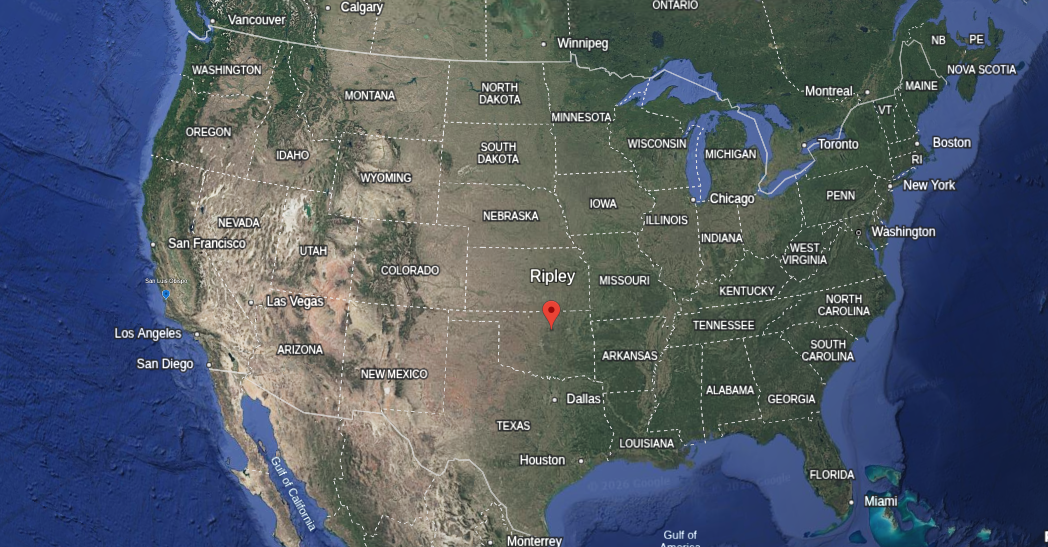
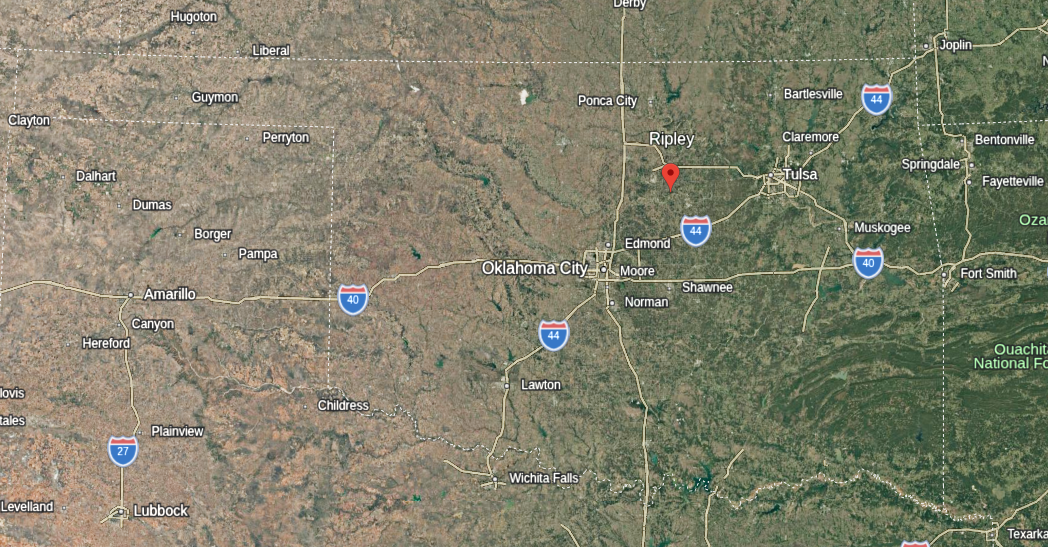
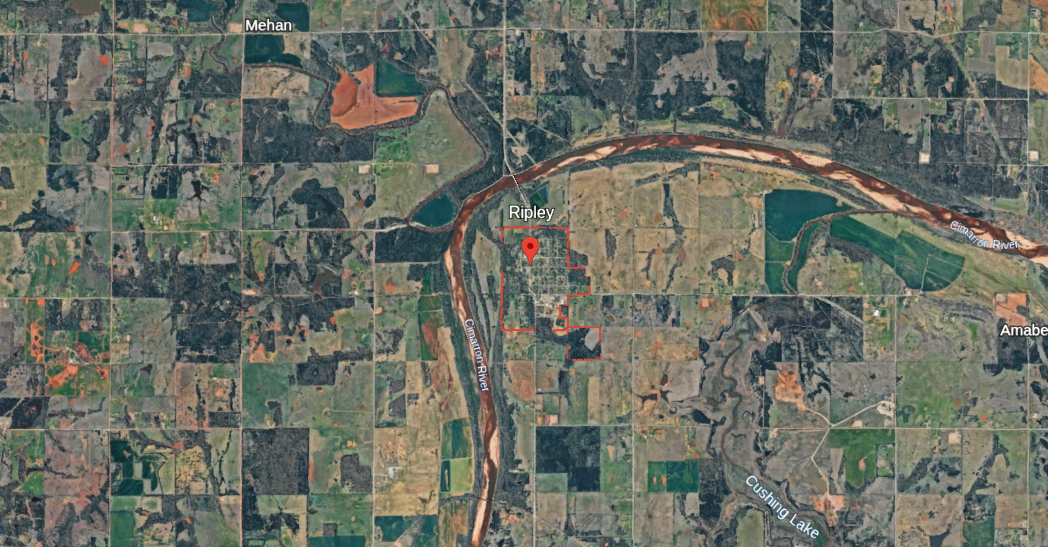
Ripley is a small town on the Cimarron River in Payne County, Oklahoma, a short distance southeast of Stillwater. Unfortunately, the label gives us nothing more specific than the town, so we don’t know whether the specimen came from the river bottom, the surrounding prairie, or oak woodland.
In terms of the WWF ecoregions (Olson et al. 2001), Ripley falls within the Central forest-grasslands transition, but only just. The boundary with the Central and Southern mixed grasslands is less than 3 km from the town, and Stillwater, a short distance to the northwest, is already on the grassland side. The type locality therefore sits right at the interface between the two ecoregions, where the oak woodland and savanna of the east give way to the prairies of the Great Plains. This makes it difficult to say which of the two habitats C. ochraceus is associated with.
How to recognize C. ochraceus
Catadelphus ochraceus should be very easy to recognize due to its large size and very striking coloration. It is about 17 mm long, and the body is uniformly fulvous (reddish-yellow), including the metasoma and legs. Only the supra-antennal area (except the medial orbits) and the ocellar area are black. The flagellum is black, with 44 flagellomeres and no tyloids, and the scape is fulvous with some dark coloration dorsally. The wings are yellowish with the base narrowly infuscate and with dark apical bands. This combination makes it easy to pick out, since the other Nearctic Catadelphus known to Heinrich have the head, mesosoma, and legs black.
Unfortunately, there is no photograph of the holotype to show here. I have not examined or imaged the specimen myself, and as far as I know no image of it is available online. In fact, GBIF currently has no occurrence records for C. ochraceus at all, not even the holotype. Everything above is therefore taken from Heinrich’s description.
Structurally, the Nearctic Catadelphus species are more difficult to tell apart. Heinrich found the American Catadelphus to be so similar in morphology and sculpture that he could not find structural characters to separate them, and his key relies entirely on color. For C. ochraceus he noted only that the head is perhaps slightly less widened behind the eyes, and that the lamellae on the propodeum (the raised carinae bordering the second lateral area) are extremely high and triangular. But it is difficult to know how constant these characters are given the lack of specimens.
Collecting additional specimens
The most obvious place to look is around Ripley and elsewhere in Payne County. But there appears to be a lack of freely accessible and at least semi-natural habitat around the area. Undoubtedly, all of the habitat around Ripley is highly disturbed (recent secondary growth after being in agricultural production or potential pesticide contamination from neighboring fields) and fragmented like most of the area, but the main difficulty is that the land is mostly or entirely private. You can certainly collect on private land but the necessity of getting the owner’s permission makes it a bit more of a pain than simply showing up to a national forest with a net. Ideally, a landowner could be convinced to run a Malaise trap on their property.
The most promising alternative I have found is the OSU Range Research Station, which is run by Oklahoma State University and covers about 5,000 acres of oak woodland and prairie west and southwest of Stillwater. This is probably the largest area of intact habitat close to the type locality, and like Ripley it sits at the interface between the Central forest-grasslands transition and the Central and Southern mixed grasslands. It is also regularly burned, which should keep it open with plenty of flowering plants. The problem is that it is a working research station and is not open to the public, so collecting there would require permission from the station. Anyone at OSU, or collaborating with someone there, would be in the best position to run Malaise traps on the station.
Lake Carl Blackwell, just to the north, is also owned by the university. It has a recreation area of about 800 acres that is open to the public, with similar habitat around the lake. However, the research land surrounding the lake is closed to public use, and collecting in the recreation area would probably still require written permission from the park manager.
Wherever the collecting is done, late April and May is probably the best time to try, judging from the date on the holotype. Malaise traps along the Cimarron River or in open areas with plenty of flowering herbaceous plants would probably give the best chance to collect more specimens. It should also be possible to find this species by hand. A 17 mm orange wasp with banded yellow wings would be hard to overlook.
Trying to rear it from a host may be another promising route. Catadelphus atrox has been reared from the sphingid Proserpinus juanita, and the European C. arrogator attacks Proserpinus proserpina and several other hawkmoths. It is almost certain that C. ochraceus also attacks a sphingid. Proserpinus caterpillars feed on evening primroses and their relatives (Onagraceae), so searching these plants for caterpillars in May and June and rearing them out could work as well as trapping. As with other members of the Callajoppa genus-group, the female is amblypygous and should attack the caterpillar, with the adult wasp emerging from the host pupa.
Finally, the insect collections at Oklahoma State University in Stillwater or the Sam Noble Oklahoma Museum of Natural History in Norman would be the most likely to have additional unidentified specimens of C. ochraceus. Anyone with access to those collections or others with material from Oklahoma, Kansas, and northern Texas should check the unidentified ichneumonid drawers for a large fulvous ichneumonine with yellow, dark-tipped wings.
Significance
The most important question for C. ochraceus is whether or not it is a distinct species. Heinrich himself wrote that the American forms of Catadelphus “display extreme differences in color of body and wings, but such congruence in morphology and sculpture” that any conclusion about their status was guesswork. Catadelphus atrox already includes a form with yellow, dark-tipped wings (described by Cresson as marginipennis), and Heinrich recorded C. atrox from Oklahoma as well. It is possible that C. ochraceus is an extreme pale color form of that species. It is also possible that it is a good species that simply hasn’t been collected again.
More specimens would certainly help resolve this question. Heinrich thought that the problem could not be solved without biological data, especially host records, so a reared specimen would be the most valuable of all. DNA from fresh material would also let us test for the first time whether the color forms of Catadelphus correspond to species, though that would require newly collected specimens of the other Catadelphus species from across North America.